
Summer Car Care: How to Maintain Your Vehicle in Hot Weather
Heat kills more car batteries than cold does, and that's only the third-worst thing the southwest summer is doing to your vehicle.

On this page
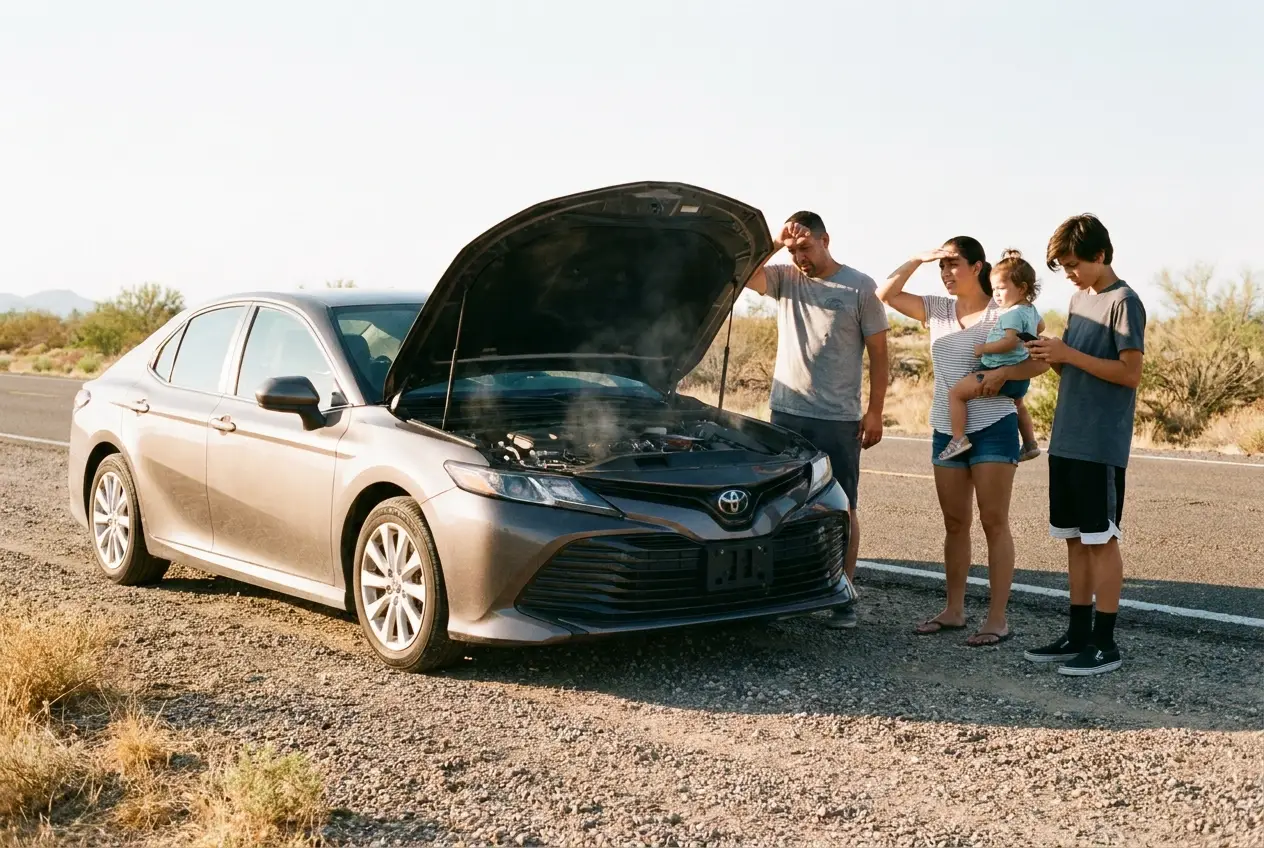
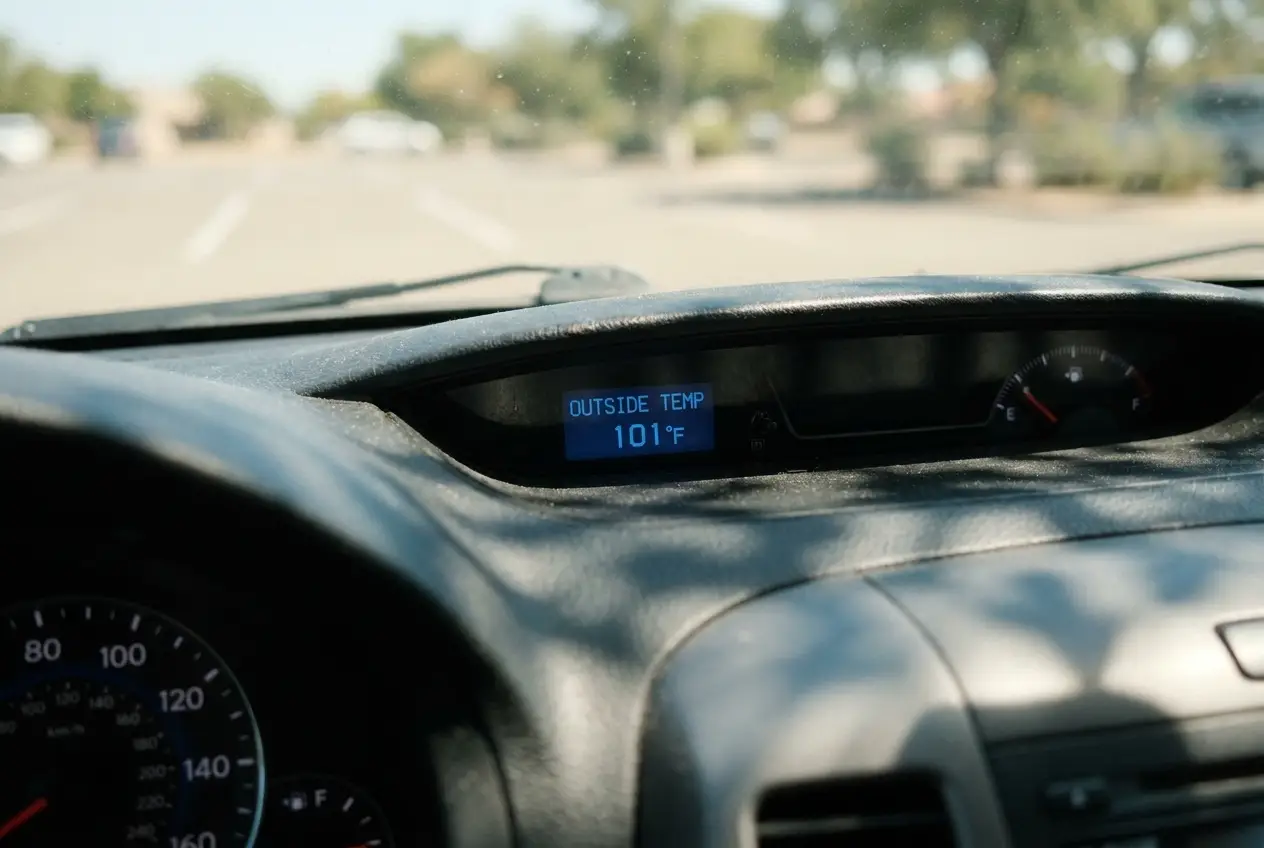
The temperature gauge in a Phoenix parking lot in July reads like a typo. The asphalt's hotter than your oven on a low bake. And the car sitting on top of it is doing chemistry you can't see, in places you don't check, until something pops on the shoulder of I-10.
This is summer car care for people who actually live where summer means business. Not a checklist for a mild June in Ohio. A real prep routine for drivers in Phoenix, Vegas, El Paso, and anywhere the pavement clears triple digits before lunch.
The southwest summer reality
Hotter, earlier, longer
2024 was the warmest year on record for the contiguous US, averaging 3.5°F above the 20th-century norm across 130 years of NOAA records. Summer 2024 came in 4th-hottest on record, 2.5°F above average. June alone landed as the 2nd warmest June ever, with the worst of it parked over the southwest.
How hot is hot? ASU researchers clocked Phoenix asphalt at 153°F on a July afternoon. NASA mapping has pushed treeless surface readings up to 160°F. That's the surface your tires are riding on for hours at a stretch.
Drivers in TX, AZ, NV, NM, and SoCal need a summer prep routine the way Minnesotans prep for winter. The twenty-minute driveway check isn't optional anymore. It's the cheap version of the tow truck call.
The battery, first
Why heat is worse than cold
Here's the part most people get backwards. "My battery died in January, so cold must be the killer." Nope.
"Heat is the number one cause of battery failure and reduced battery life," says Marie Dodds, public affairs director at AAA Oregon/Idaho. Dead batteries, flat tires, and lockouts are the top three reasons AAA gets summer calls.
The mechanism is boring chemistry. Heat speeds up reactions inside the battery and evaporates the fluid, which damages the plates over time. By the time winter rolls in, the cold doesn't kill your battery. It just exposes a battery that summer already murdered.
What to do, in five minutes:
- Pop the hood. Look at the terminals. White or green fuzz means corrosion. Clean it.
- If the battery's three years old or more, get it load-tested at any auto parts store. Free, usually.
- Slow cranks on a hot morning are a warning shot. Don't ignore them.
Tires and 150°F pavement
Pressure rises, sidewalls flex
Hot air expands. So does the air inside your tires. AAA notes pressure can rise about 5 PSI in a heat wave, and some measurements put the internal increase closer to 20%.
Check pressure when the tires are cold. Early morning, before you've driven. Match the number on the driver's-side door jamb, not the max printed on the sidewall. Those are two different numbers and people confuse them all the time.
NHTSA flags underinflated tires as the most common cause of tire-related accidents. Underinflation means more sidewall flex, more flex means more heat, more heat on 150°F pavement means a blowout you'll remember for years. Bald or six-plus-year-old tires on Phoenix asphalt is a bet you don't want to take.
Coolant, hoses, and the overheating gauge
The system that's actually fighting the heat
While you're sweating through your shirt, the cooling system is doing the real work. Pop the hood with the engine cold and check the coolant level at the reservoir. Low means there's a leak somewhere, or the system's been ignored.
Old coolant turns acidic and loses its ability to move heat. Flush it on the manufacturer's interval, not when you remember. Then squeeze the upper radiator hose. Soft and mushy? Replace it. Rock-hard with little cracks? Replace it. Hoses are cheap. Roadside towing isn't.
Drive belts crack under heat cycling. Visible cracks, glazing, or that squealing sound on startup all mean it's living on borrowed time.
The temp gauge is the one you can't ignore. If it climbs in stop-and-go traffic, that's the early warning. Pull over, kill the AC, and let it cool before you make it expensive.
What gets left in the car
The numbers nobody wants to read
This is the part where the host voice goes quiet, because the stats are bad.
NHTSA reports that an outside temperature in the mid-60s can push a car's interior past 110°F. Jan Null's research at San Jose State found that at 80°F outside, the inside hits 99°F in ten minutes and 114°F in twenty. Cracking the windows does almost nothing.
More than 1,010 children have died of heatstroke in cars over the past 25 years. That's about 37 a year, roughly two per week during summer. Over half of those deaths happen because a caregiver forgot the child was back there.
It happens to attentive parents. It happens on routine days. It happens to people who swore it couldn't happen to them.
Habits that actually prevent it
- Look before you lock. Open the back door every single time you park, even when you "know" it's empty.
- Put something you need in the back seat next to the car seat. Phone, wallet, work badge, left shoe. Something you can't leave without.
- The stuffed animal trick: it rides in the car seat when empty, and in the front passenger seat when a kid is back there. The animal up front is your visual cue.
- Lock the car at home so curious kids can't climb in and get trapped.
- If you see a child alone in a hot car, call 911. Most states have Good Samaritan laws covering you for what comes next.
Same rules apply for dogs. The math doesn't change for fur.
The hot-weather kit
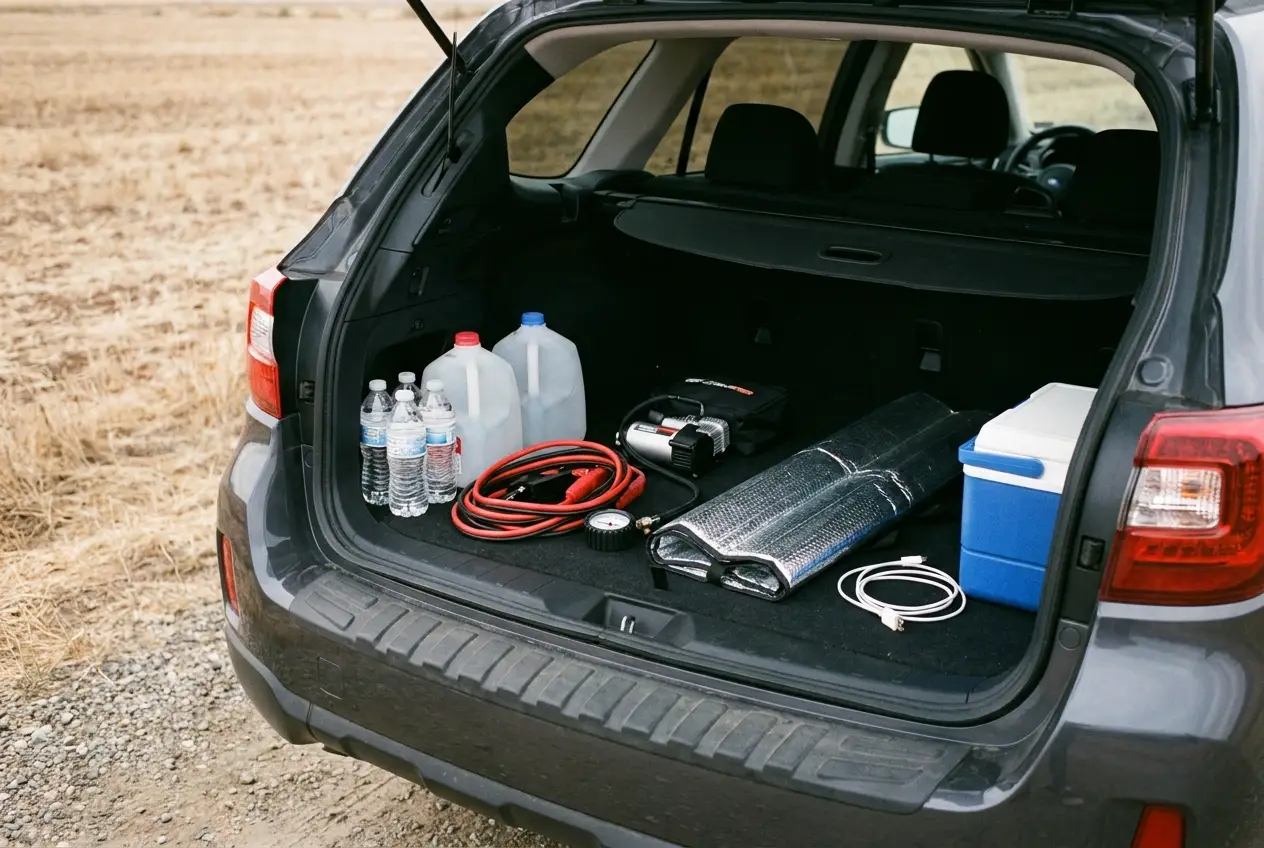
What lives in the trunk from May to September
A summer kit is mostly water and backup plans. Build it once in May, leave it alone until September.
- Water. More than you think. Gallon jugs for the radiator if it boils over, bottles for the people in the car.
- Jumper cables or a small lithium jump pack. Heat-killed batteries don't send a warning text first.
- Tire pressure gauge and a 12V inflator that actually works. The $9 ones don't.
- A windshield sunshade. Interior temp drops measurably with one in, and your steering wheel stops being a branding iron.
- A phone car charger that doesn't melt and a paper map for the stretches with no signal. West Texas eats bars for breakfast.
One last thing for the long family drives and the cheap weekend ones: hour three of 100°F cornfield miles is when the back seat starts to break down. A voice-only car game keeps the crew yelling at each other instead of fighting over the AC vents. The DashDashBoom app lives in that exact stretch of road.
Battery, tires, coolant, and a hard rule about who and what gets left inside. A handful of twenty-minute checks done before the temperature gauge becomes a problem. The pavement isn't getting cooler, and the summer keeps creeping earlier. The driveway check beats the shoulder-of-I-10 call, every time.