
Summer Driving Safety Tips: Keep Your Car Running Cool All Season
A driveway check, a jump pack, and one habit that's saved more kids than any dashboard alert.

On this page
It's 8:47 a.m. in a Target parking lot. Kids in the back, cooler in the trunk, you turn the key, and the starter drags like it just woke up from a nap. That slow crank on a hot morning is the single most ignored warning sign in summer driving safety tips, and it's the noise that ends a lot of road trips before they start.
AAA expects to pull 7.7 million drivers off the shoulder this summer, and the top three reasons (dead batteries, flat tires, lockouts) are all things you can head off in your own driveway. This is for folks who own a late-model car, don't own a torque wrench, and would rather not become a tow statistic.
Why summer is harder on your car than winter
The B-E-T problem
AAA has a summer mantra: Battery, Engine, Tires. Those three things drive most of the roadside calls every July and August. In one recent summer, the auto club logged 1.6 million battery jumps, 1 million flat tires, and 1 million lockouts across the country.
Older cars get hit hardest. Vehicles ten years and up are four times more likely to need a tow, but new-car owners aren't off the hook. Heat is the equalizer. AAA Southern California also reports that 4 out of 10 American drivers admit they're unprepared for a roadside breakdown. Which is wild, considering most of it is fixable on a Saturday morning.
Heat math
Here's the part people get wrong. We all blame the cold for dead batteries, but Consumer Reports found car batteries last around 58 months up north and under 41 months in the deep south. Heat evaporates electrolyte. Heat speeds up sulfation on the plates. Winter is just the season that exposes a battery already cooked the previous July.
And there's more traffic on hotter pavement than ever. AAA projected 72.2 million Americans would travel over the Independence Day 2025 week alone. More cars, more heat, same shoulders. For the longer version of the heat story, here's our piece on summer car maintenance in hot weather.
The 20-minute driveway check
Coffee in one hand, owner's manual in the other. That's the whole setup.
Battery
Pop the hood and look. White or green crust on the terminals? That's corrosion, and a paste of baking soda and water cleans it up in a minute. Check the case for swelling or bulging. Find the date sticker. If your battery is three-plus years old going into summer, swing by any auto parts store and ask for a free load test. Most do them at the counter.
Slow cranking on a hot morning is the warning. Not a quirk, not a personality. Fix it before you're standing in a rest-stop parking lot at 11 p.m.
Tires
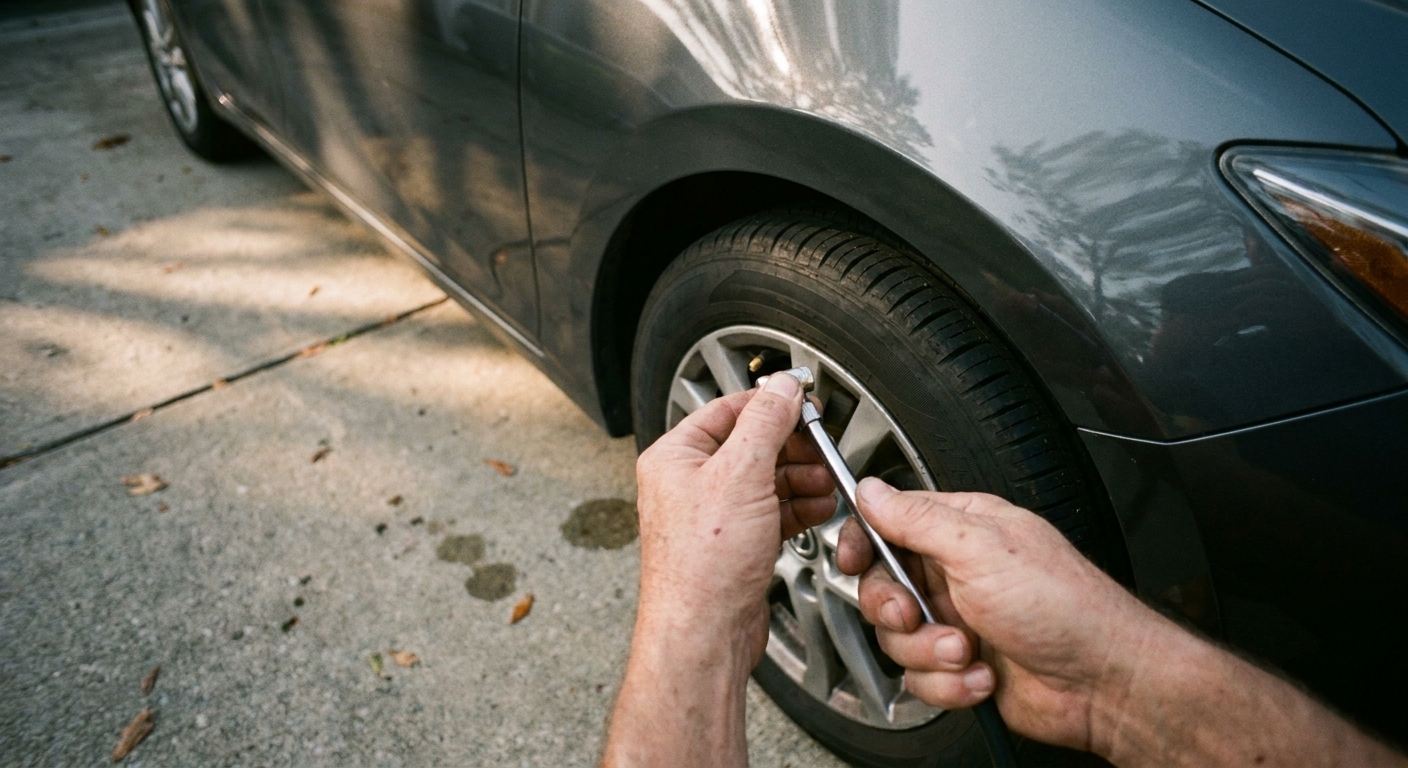
Check pressure cold. Before the car has driven more than a mile. Heat artificially pumps readings up, and Tire Rack's rule of thumb is that pressure changes about 1 to 2 PSI per 10°F. So a tire that reads 35 PSI on a 100-degree afternoon will read low at dawn. Don't bleed air out of a hot tire. You'll regret it Tuesday morning.
While you're down there, do the penny test for tread depth, eyeball the sidewalls for cracks or bulges, and check the spare. NHTSA recommends keeping a gauge in the glovebox and checking pressure monthly. The gauge costs five bucks.
Coolant, belts, hoses
Pop the overflow reservoir cap when the engine is cold. Never open a hot radiator cap. The fluid level should sit between the min and max lines, and the color should match what the manual specifies. Don't mix coolant types. Most late-model long-life coolants stretch to 100,000 miles, but verify in your manual.
Squeeze the upper and lower radiator hoses. They should feel firm. Spongy is bad. Rock-hard is also bad. Look at the serpentine belt for cracks, fraying, or a shiny glaze on the surface.
A/C, wipers, oil
If your A/C is blowing weak or lukewarm in May, get it looked at before July. Could be refrigerant, could be the condenser fan, could be a cabin filter clogged with last fall's leaves. Replace wipers if they smear, because summer storms plus bug splatter plus a half-dead blade equals a windshield you can't see through at 70 mph. Top off washer fluid. Check oil on the dipstick and change it per the manual.
The full version of this list lives in our pre-trip car inspection checklist.
The trunk kit you'll hopefully never open
You don't need a survival bunker back there. Five things.
A small lithium jump pack beats jumper cables, because you don't need a second car at 11 p.m. on I-80. A tire pressure gauge and a cheap 12V inflator that plugs into the cigarette lighter. One gallon of water for the cooling system, plus actual drinking water for the humans. A flashlight with fresh batteries, a basic first aid kit, and a phone charger that fits everybody's phone.
And the owner's manual. In the glovebox. Most people have never opened theirs. I'm asking nicely.
Hot cars and the back-seat habit
The numbers nobody wants to read
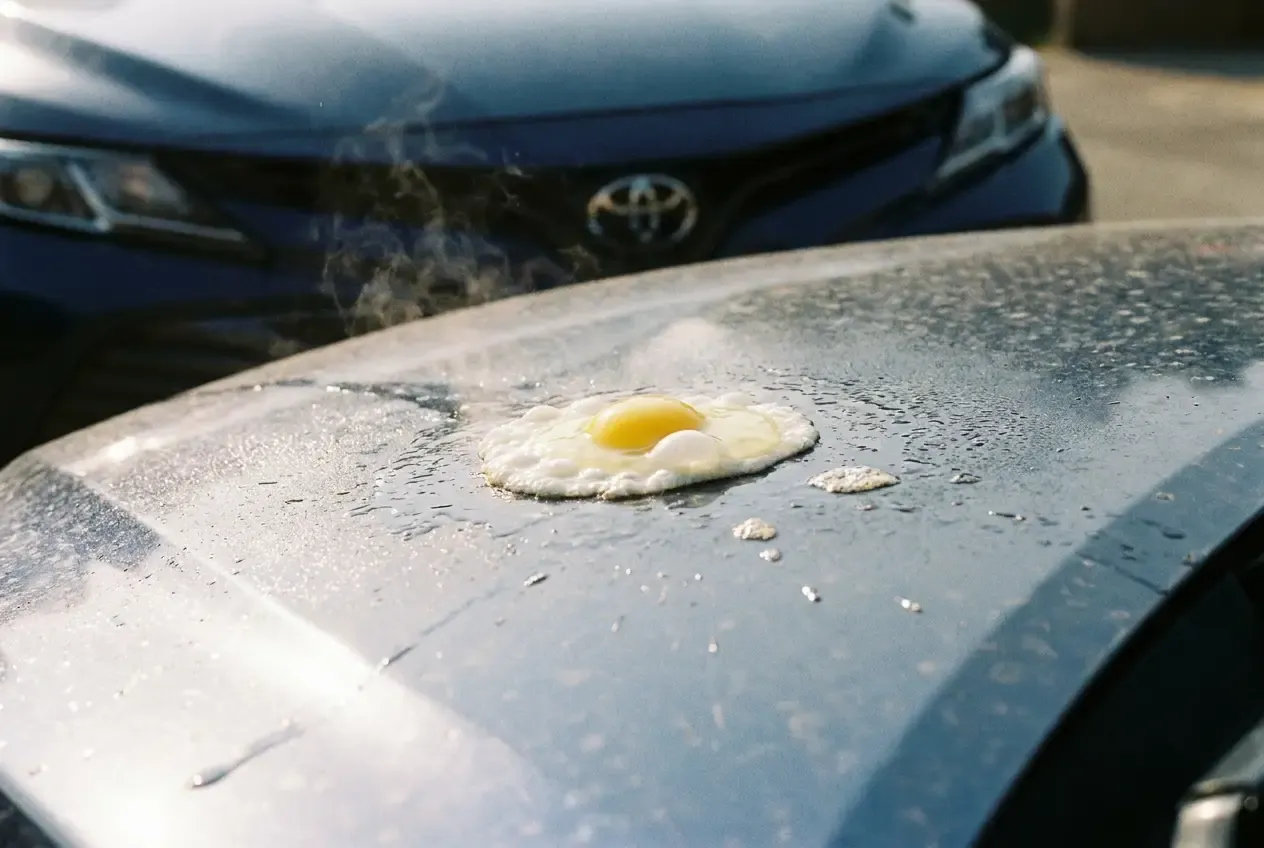
At 90 degrees outside, a car interior hits 109°F in 10 minutes and 124°F in 30. Cracking the windows barely moves the line. Kids' body temperatures rise three to five times faster than an adult's.
Over the past 25 years, more than 1,010 children have died of vehicular heatstroke. The National Weather Service puts the annual average at 38 deaths a year from 1998 to 2022. More than half of those cases are a caregiver forgetting. Not negligence. Memory. Sleep-deprived, schedule-juggling, autopilot memory.
The one habit
Put your phone, your wallet, your left shoe, your work bag, anything you'll need on arrival, in the back seat. Every time you buckle a kid in. It forces you to open the back door before you walk away from the car. Same rule for pets. A quick stop at the grocery store in July is the wrong call.
That's it. That's the whole tip. It's saved more kids than any dashboard chime.
The car is ready. Now the back seat.
The mechanical part isn't the hard part. A perfectly maintained car still gives you four hours of "are we there yet" and one kid kicking the back of your seat in 4/4 time.
Snacks help. A stack of road games helps more. The classics still hold up, and we've rounded up the best of them in road trip games every family should know along with five kid-tested favorites that buy you real miles. If you want something voice-only that keeps eyes on the road and phones face-down, the DashDashBoom car scavenger hunt game app does the hosting for you.
Heat doesn't care how new your infotainment screen is. Twenty minutes in the driveway with a tire gauge, a flashlight, and your owner's manual handles most of what AAA gets called out for. Do the check before the first 90-degree week. Throw a jump pack and a gallon of water in the trunk. Put your phone in the back seat every single time you buckle a kid in.
The drive itself is the next problem.