
Why Gas Prices Vary by Neighborhood (And How to Exploit It)
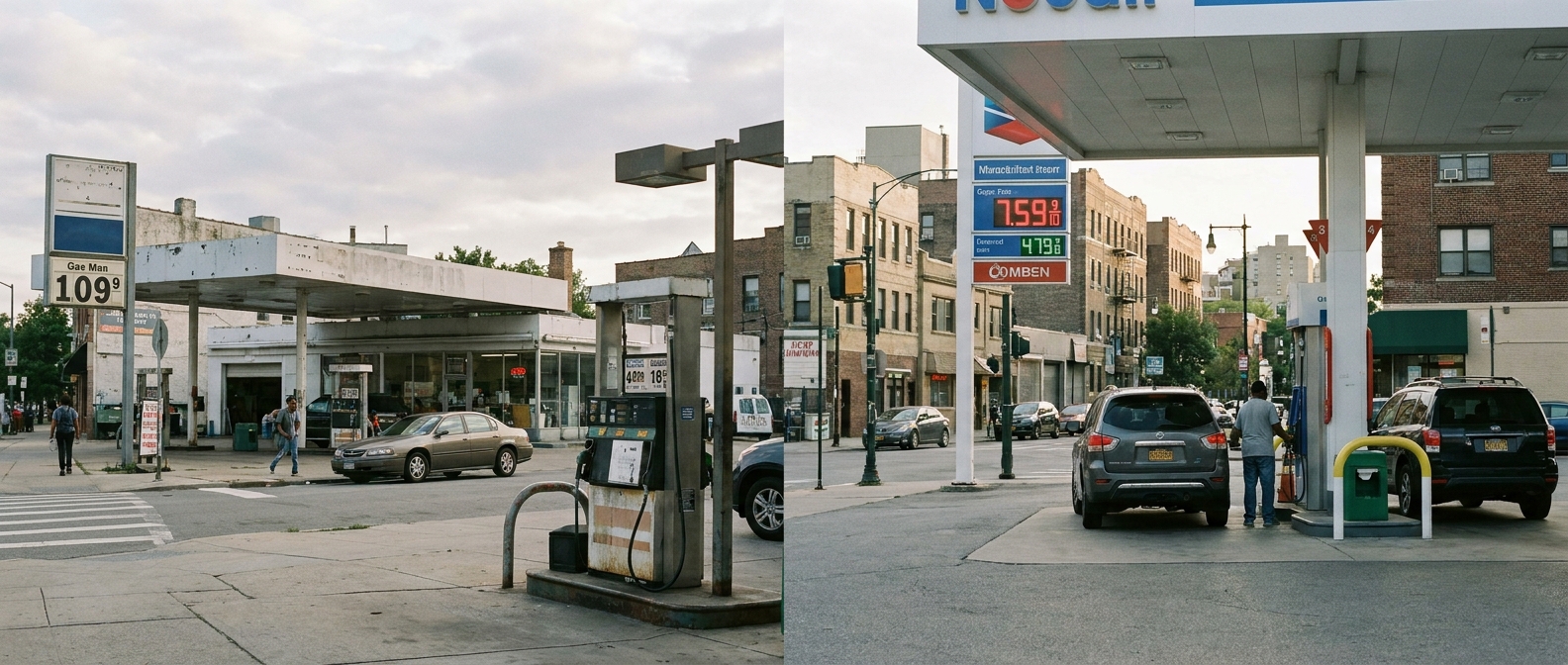
Two stations a mile apart, same gas, almost $.75 difference in price. Why, you say?!?! Once you know, you can drive right past the expensive one.

On this page
It always happens, the low-fuel light on your thirsty SUV dings somewhere past the cornfields. Now you've got a call to make. The station right off the ramp...or, do you choose the one two turns into town (that you can't even see yet). Same gas, but sometimes the price varies dramatically. What gives? Well, you'll be surprised to learn, the reason has almost nothing to do with the gas.
Once you can read the pattern, you'll drive right past the expensive pump without flinching...and save yourself a bundle over time.
Same gas, nearly a dollar apart.
What's actually in the price.
Here's the part that surprises people. The fuel itself is barely the story.
In 2024, crude oil made up about 55% of what you pay at the pump, with refining at 13%, taxes at 15%, and distribution plus marketing at 16%, according to the convenience-store industry group NACS. Crude is the same crude for every station in your metro. State and federal taxes? Same too. The federal excise tax alone is 18.4 cents a gallon no matter which corner you pull into.
So the gap between two stations a mile apart lives almost entirely in that distribution-and-marketing slice. Plus whatever the owner decides to do with it.
Daily crude swings don't explain it either. Retail prices move only about 2.4 cents a gallon for every dollar crude shifts per barrel. A neighborhood spread of a buck or two? That's not the oil market. That's local.
It's not Big Oil setting the price.
Quick gut check from the back seat: who actually owns the station?
Not the company on the sign, usually. About 95% of the c-stores that sell gas are independently owned, single-store operators or regional chains. Major oil companies own under 0.2% of them, per NACS. Each of those owners picks a lane. Low margin, high volume. Or high margin, low volume.
So the station with the highest posted price might be making the LEAST profit, depending on when, how, and where it bought its last delivery. Real estate, labor, credit-card fees, and how often the tanker shows up all feed the number on the sign. Some stations get three deliveries a day. Some get one every three days. That changes their math, and their math becomes your price.
Convenience is a tax.
What the Santa Barbara study found.
Two geographers at UC Santa Barbara, Alan Murray and Jing Xu, decided to find out where the gaps come from. They pulled GasBuddy data across Santa Barbara County and ran the numbers, publishing the results in 2019.
The pattern was clear. Stations near shopping centers, within roughly 2.75 miles, and near major thoroughfares charged more. Why? Because nobody actually drives for gas. You fill up while you're doing something else. Grabbing groceries, picking up a kid, getting back on the highway. A station parked near where you already are can charge a premium and you'll pay it without thinking.
Murray put it plainly: "You're always going to pay for convenience."
Why the ramp station gouges you.
Stations closest to freeway on and off ramps charged more than ones on interior streets. The "urban fringe," that zone where the city runs out and the open road begins, was the worst spot for a captive driver.
Their biggest outlier said it all. A station in Goleta, just off the 101, the last major brand for miles, charged about 68% above the county average. Roughly two dollars a gallon more. Murray called it "taking unfair advantage of a location," aimed at highway traffic and young drivers near a high school who don't clock the difference.
That's the ramp station. It knows your tank is low and your options are gone. Pacing matters here. If you've ever followed the 3-3-3 rule for road trips, you already plan stops before the gauge gets desperate. Desperate is exactly what the ramp station is counting on.
Competition is the equalizer.
Why clusters of stations are cheaper.
So what pulls prices back down? One thing, mostly. Competitors you can see.
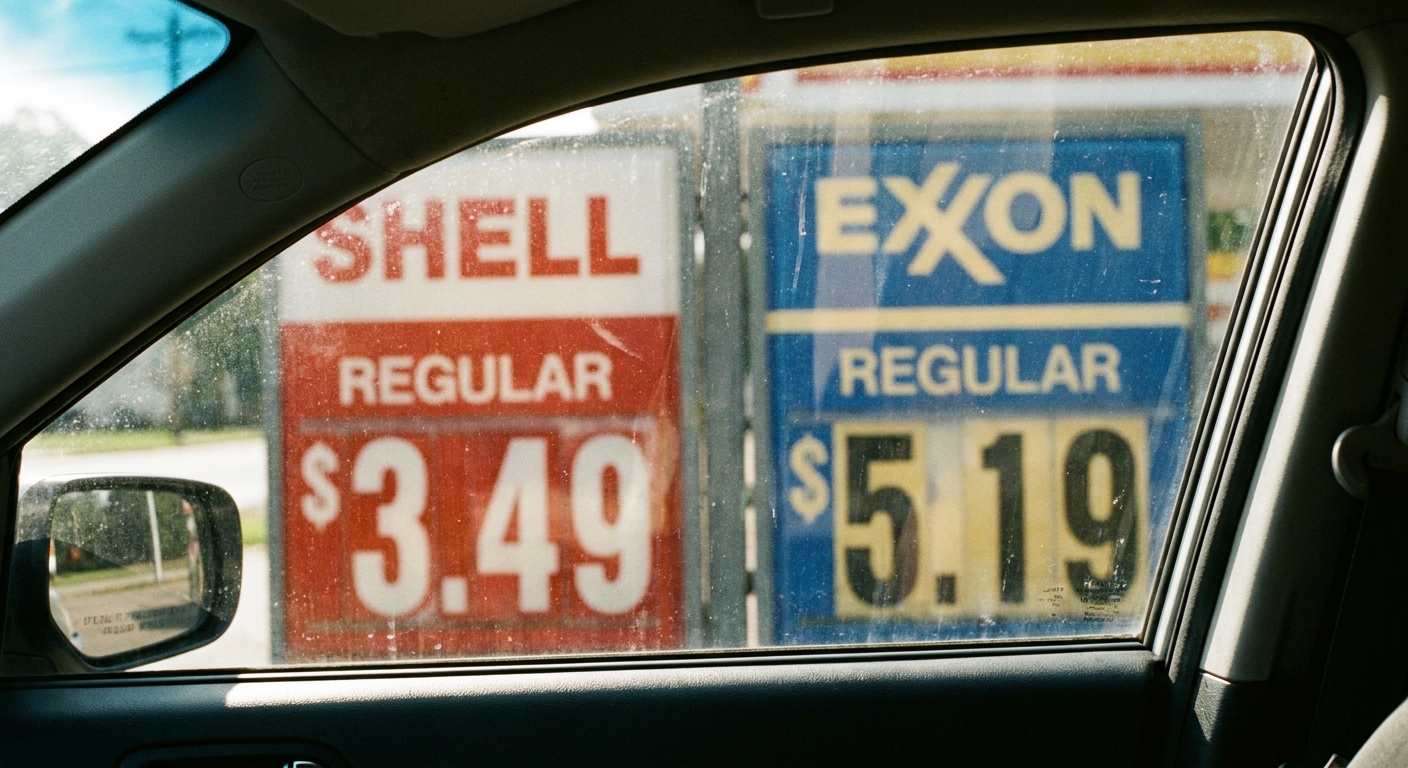
Murray and Xu found the single biggest factor dragging prices lower was having other stations nearby. Two of them across the street from each other watch each other's signs all day and undercut by the cent. One station alone by the highway has no reason to drop a penny. None.
Supermarket-affiliated stations tend to run cheaper, since gas is bait to get you inside. So do stations with busy car washes or convenience stores, and rural ones. The rule of thumb is almost dumb in how well it works: the more pumps you can see from where you're standing, the better your odds of a fair price.
If you're rolling through a state where every gallon stings, like California's high-price stretches, finding a cluster matters even more.
The secret one: zone pricing.
When the station pays more for the same fuel.
Here's the one almost nobody talks about. Refiners and wholesalers don't charge every dealer the same wholesale price. They split a region into geographic "price zones," and the wholesale cost shifts from zone to zone.
How are the zones drawn? A secret weighting. Number of competing stations, traffic flow, population density, local income, geography. The driver never sees the map.
So sometimes a station literally pays more for identical fuel just because of which side of an invisible line it sits on. Then it passes that cost to you. This is what explains spreads that location and competition alone can't account for, and it's why two stations flying the same brand a few miles apart can post different numbers. Same logo. Different zone. Different price.
How to play the system.
The fill-up rules.
You don't need a spreadsheet. You need a handful of habits.
Fill up on interior streets, not at the ramp. Skip the last station before a long empty stretch, and skip the first one right off the highway too. Aim for clusters where the signs are fighting each other, especially supermarket-affiliated ones. Check before you commit. A price app like GasBuddy tracks 150,000-plus stations and has well over 100 million downloads, so the cheap pump is usually one glance away.
One warning. Don't chase pennies ten minutes out of your way. The fuel you burn getting there eats the whole savings, and your right foot already costs you more than you'd guess. A few cents isn't worth a detour.
The cash-vs-credit lever.
Last one, and it's free. Card processing fees run about 1.5% to 3.5%, which stations frame as a "cash discount" instead of a credit surcharge. The gap is usually 5 to 10 cents a gallon.
On a full road-trip tank, that's a couple bucks back in your pocket without driving an inch.
Skip the ramp, find the cluster, pay cash where there's a discount, don't waste fuel chasing pennies. Once the whole crew knows the rules, picking the pump turns into its own call-and-shout from the back seat, which is the same kind of spotting game DashDashBoom runs when things get quiet between exits.
The light's still dinging. You know what to do now.