
How to Save on Gas in California: Tips for High-Price States
Did you know...that empty roof rack on your car is quietly costing you up to $220 a year? Yup, that's a ton of coin for unused car fashion accessory.

On this page
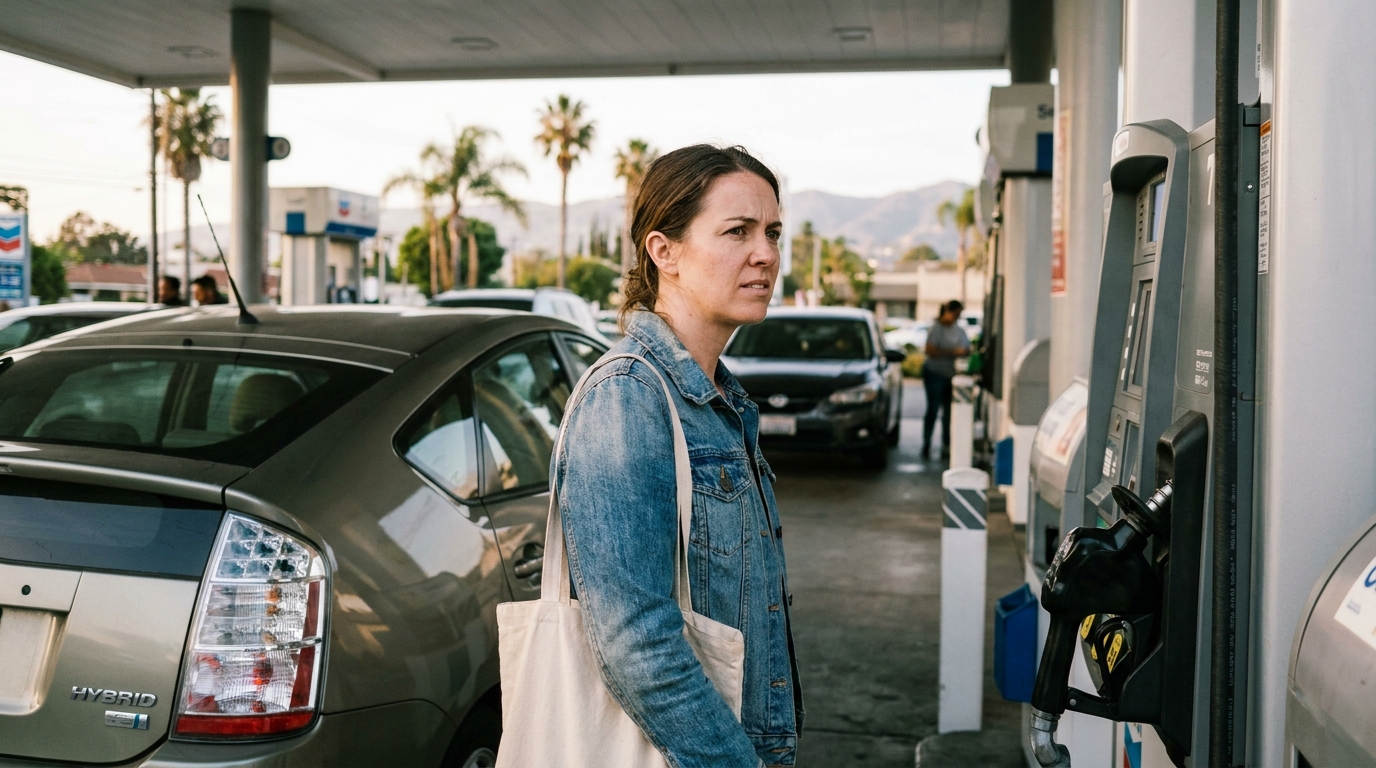
You roll into a California station and the pump starts ticking. Soon, you notice the dollar counter is sprinting way ahead of the gallon counter. WTF?!?! By the time the nozzle clicks off, you've paid more than you would almost anywhere else in the country. Saving on gas in California starts with one fact: the West Coast owns the top of every pump-price ranking, and there are real reasons for it. Better news? A handful of moves actually cut what you spend.
Why California pumps the highest numbers in the country
The isolated fuels market
California is basically its own gas island. No pipelines bring fuel into the state. The only ones run east, shipping fuel out to Nevada and Arizona, according to the California Energy Commission. So when a refinery hiccups, replacement supply has to arrive by ship, and that boat ride can take roughly three weeks. A short outage keeps prices high for a long time.
There's also the blend. California cars run on a special clean-burning gasoline that few out-of-state refineries bother to make. Add the state's environmental program fees on top, and the math only goes one way.
It gets tighter. In 2025, about 81% of California's gas came from in-state refineries, and only 8 of the state's 12 refineries made the special blend. Valero's Benicia refinery planned to stop refining by the end of April 2026. Fewer refineries means less cushion when something goes wrong.
Roughly 90 cents a gallon in taxes
Now stack on the taxes. California's state gasoline excise tax climbed to $0.612 a gallon on July 1, 2025, the highest of any state. That's just the state piece.
Add local and federal taxes and California drivers pay about 90 cents a gallon in taxes alone, per the EIA's March 2025 numbers. No surprise, then, that AAA data keeps the West Coast parked at the top of the most-expensive list. That dollar gap you feel at the pump is built right into the system.
Fill up before you cross the border
The state-line trick
Here's the good part for road trippers. Drive into Arizona or Nevada and the gas runs on standard blend with lower taxes. It's dramatically cheaper, sometimes shockingly so. Same car, same tank, way less money.
If your route crosses a state line anyway, plan the big fill-up for the cheaper side. Topping off in Needles before you hit Arizona, or waiting until you're across into Nevada, can shave a real chunk off the trip's total fuel bill. Pacing your gas stops is the same skill as pacing the whole drive, which is exactly what the 3-3-3 rule for road trips is built around.
Half a tank is your cue
Don't wait for the warning light. Fill up when the gauge hits half so you've got room to roll past an overpriced station and find a better one. No panic stops at whatever exit happens to show up.
There's a mechanical reason too. Running below a quarter-tank can pull gunk from the bottom into your fuel system. Keep some fuel in there.
To scout ahead, GasBuddy is the move. Free, downloaded over 100 million times, and it shows the cheapest stations before you exit. The company says deal alerts plus its card can save up to about 25 cents a gallon. Loyalty programs help too, and the cash-versus-credit gap usually runs 10 to 15 cents a gallon. Over a long trip, those nickels and dimes pile into real dollars.
How your right foot burns money
Slow down ten miles an hour
The cheapest gas savings live in your right foot. The Department of Energy reports that aggressive driving lowers mileage 15 to 30% at highway speeds and 10 to 40% in stop-and-go traffic. That's not a rounding error. That's a quarter of your gas, gone, because you were in a hurry.
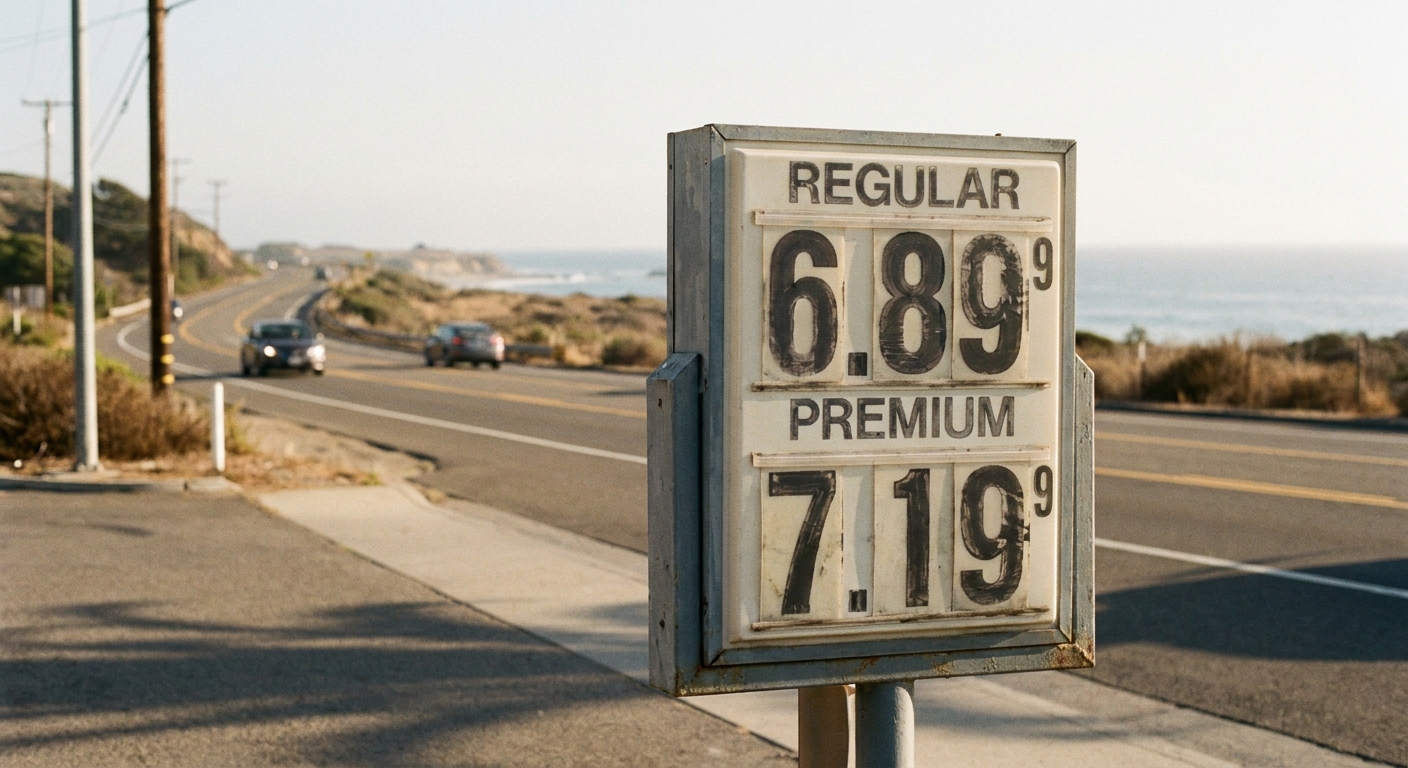
Slow down. Consumer Reports found that easing off 10 mph cut fuel use by as much as 8 mpg, around $400 a year at $4 a gallon in a 35-mpg car. They put it bluntly: the gap between driving 55 and 75 is like trading a compact for a big SUV. Hard braking plus hard acceleration knocked another 2 to 3 mpg off in their tests.
One thing to leave alone: that auto stop-start feature that shuts the engine at red lights. People hate it and switch it off. Don't. SAE International tests show it saves 7 to 26% in city traffic. Eco mode, on the other hand, won't beat just driving smooth.
What's strapped to your roof and stuffed in your trunk
Take the empty rack off
Look up. That roof rack you installed three summers ago and never took down? It's costing you right now. Empty.
Consumer Reports measured it. A roof rack carrying two bikes costs 7 to 13 fewer mpg. A cargo box alone runs 5 to 9. And an empty rack still adds 2 to 5 mpg of consumption, which works out to $120 to $220 a year. For nothing. For wind drag on bare metal bars.
Pull it off when you're not using it. While you're at it, clear the junk out of the trunk. Extra weight burns extra fuel, and nobody needs the winter emergency kit riding along on a July trip.
Tires, oil, and the premium myth
Air is free, and it pays. Proper tire inflation improves mileage up to 3%, and every psi you're low costs about 0.2%. Using the recommended motor oil grade adds another 1 to 2%. Low-rolling-resistance all-season tires beat grippy all-terrains at the pump too. A quick tire check is one line on any decent pre-trip car maintenance checklist.
Then there's the premium gas myth. Unless your owner's manual flat-out requires it, regular is fine. AAA found premium ran about 88 cents a gallon more, roughly $420 a year extra for a 25-mpg car, with no real performance gain in Consumer Reports testing. Do spring for Top Tier gas (Costco, Shell, Exxon) when you can. The extra detergents are worth it long-term, and that matters more in summer heat, which already puts a beating on your engine. Just don't chase pennies at a sketchy off-brand.
The part that's actually in your hands
California's pump math isn't changing. But most of what you spend is up to you: where you fill up, how you drive, whether there's an empty rack catching wind the whole way. Pull the rack. Ease off the gas. Fill up before the state line. Let GasBuddy do the scouting.
And on that long flat stretch between one cheap-gas exit and the next, when the back seat starts asking how much longer, the DashDashBoom game is what keeps the crew shouting at red trucks instead of at each other.
FAQ
How do you save the most money on filling up a gas tank?
Fill up at half a tank so you have room to find a cheaper station, use GasBuddy to scout prices before you exit, and skip premium unless your manual requires it. Lean on loyalty programs or cash discounts too, which run 10 to 25 cents a gallon. Together those moves add up over a single trip.